Home › Industrial Floors and Specialty Slabs
Meet demanding specifications with industrial concrete floors in ATX, TX. We install high load slabs, superflat floors, and specialty surfaces for manufacturing, storage, and food facilities. Get precisely built concrete floors engineered for your equipment and operations.
Superior Concrete ATX provides professional industrial concrete floor throughout ATX, TX, Texas and the surrounding area. Our licensed, insured crew delivers safe, clean, on-time work with a free estimate before anything begins. Call (737) 258-3740 or request your free quote.
Industrial Concrete Floors for Austin Worksites
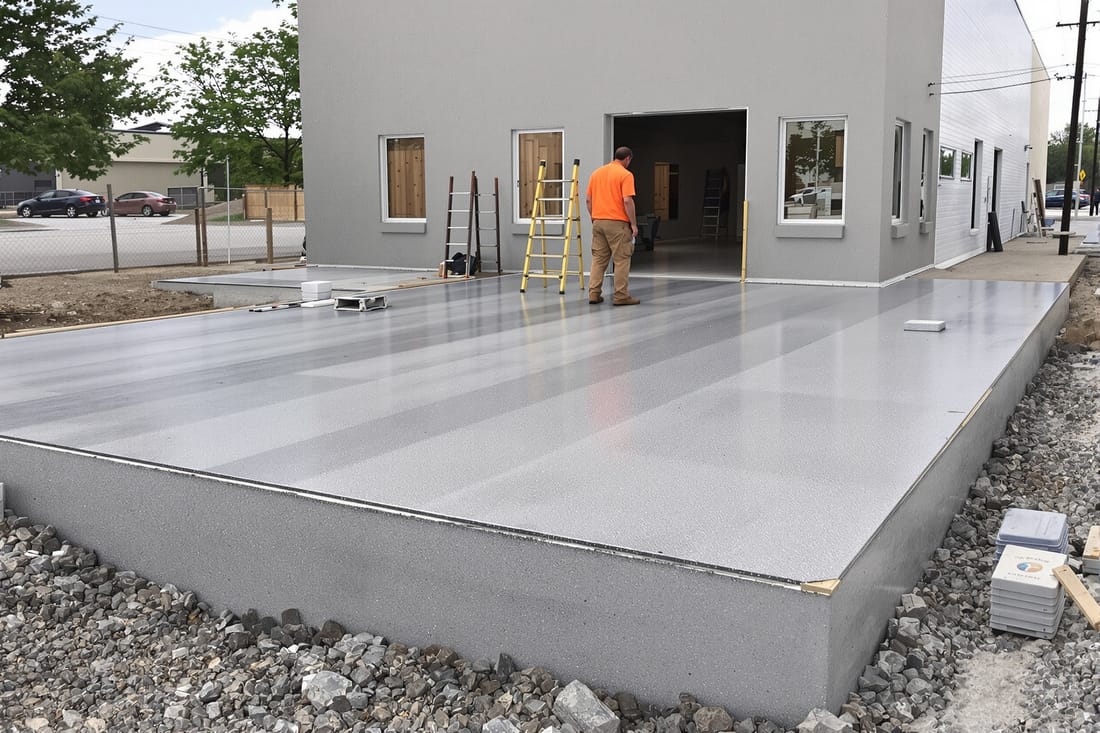
Industrial concrete floors in Austin are constantly tested by forklift traffic, pallet jacks, moisture changes, and the occasional chemical spill. At Superior Concrete ATX, we design and build floors and specialty slabs that match how your facility actually operates, not just what looks good on paper.
When we visit your site, we start by asking specific questions. What will be moving across the floor and how often. Are you using narrow aisle forklifts, heavy reach trucks, or just hand carts. Will there be racking anchored into the slab. Are there wash down areas, hot equipment, or chemical storage. These details drive the concrete mix, reinforcement, slab thickness, and joint layout.
For many ATX projects we install 6 to 8 inch slabs with properly spaced control joints for standard warehouse traffic. For heavier manufacturing or high bay storage we often move to 8 to 10 inch slabs, higher strength mixes, and tighter flatness requirements so racking and machinery stay true. Our goal is to give you an industrial concrete floor that does not surprise you with curling joints, cracked dock areas, or slab settlement a few years later.
Planning, Engineering, and Local Requirements in ATX
Industrial floors and specialty slabs in Central Texas must account for local soil conditions, city reviews, and sometimes fire and environmental requirements. Superior Concrete ATX works directly with licensed structural engineers who understand Austin clays, slopes, and the high shrink/swell potential of some local soils.
On larger projects we coordinate with your engineer or provide referrals. You will typically need a stamped slab design for new construction or major renovations in commercial or industrial zoned areas within Austin city limits. The city of Austin may check the structural sheets as part of the building permit set. For projects in surrounding jurisdictions like Round Rock or Buda, requirements vary, but inspectors will still want to confirm slab thickness, vapor barrier use when required, and anchor installation.
We also ask about floor coatings or specialty finishes early. Some coatings have specific moisture tolerances. If you plan to install epoxy or polyurethane later, we may recommend moisture testing and a vapor barrier or mitigation system so the coating manufacturer will honor its warranty. Addressing these points in the planning phase avoids delays and costly rework once the building is already framed and scheduled trades are lined up.
Site Preparation and Subgrade Stabilization
Even the best concrete mix will fail if the base is not prepared correctly. In the Austin area we frequently see caliche pockets, clay lenses, and cut and fill sites that were never compacted to industrial standards. Superior Concrete ATX takes subgrade prep seriously because this is where many floor problems start.
Our crew begins by stripping organic material and soft spots. We check elevations and plan where we need moisture conditioning or imported base. In many industrial projects we bring in 4 to 8 inches of compacted flex base or crushed stone over the native soil, compacted in lifts to meet the engineer's specs. Where soils are expansive or undocumented, we may recommend lime or cement stabilization so the slab rests on a more uniform platform.
Before we pour, we verify compaction, install a vapor barrier when specified, and set edge forms or keyways at door openings and dock plates. In areas like freezers, wash bays, or food processing, we may pitch the slab to trench drains and coordinate with the plumbing contractor so drains, cleanouts, and sleeves are exactly where they need to be. Good subgrade work is not glamorous, but it is what lets your industrial concrete floor stay level and serviceable for decades.
Reinforcement, Joints, and Mix Design Choices
Industrial concrete floors and specialty slabs are all about balance. Too many sawcuts or joints and you fight spalling and maintenance. Too few and random cracks show up where you do not want them. Superior Concrete ATX uses reinforcement, joint strategies, and mix designs that are tailored to your usage.
For many projects we use welded wire reinforcement or rebar on proper chairs, not thrown into the mud. Heavy point loads, such as under rack posts or machinery pads, often justify thicker slab sections with additional rebar mats or localized thickened areas. When owners want fewer joints, we may recommend steel or synthetic fiber reinforcement along with doweled joints to control crack widths and transfer loads across panels.
Concrete mixes are not one size fits all. Standard industrial floors might use a 4000 to 5000 psi mix with lower water content for strength and durability. For high traffic forklift aisles, we may specify hardener additives or surface hardeners to resist abrasion. In facilities prone to thermal shock or hot wash downs, we factor temperature swings into our mix and curing approach to reduce thermal cracking.
Joint layout is drawn out in advance, coordinated with column lines, equipment layouts, and door thresholds. On many ATX projects we install armored joints or steel angle protection at high traffic doorways and dock doors. This helps protect the slab edge from chipping under steel wheels and pallet impacts.
Specialty Slabs for Heavy Equipment and Unique Uses
Beyond large floor areas, Superior Concrete ATX builds specialty slabs for equipment, production lines, and unique industrial operations across the Austin region. These often carry higher loads or require tighter tolerances than the rest of the floor.
Examples include machine foundations, compressor pads, CNC bases, tank slabs, and isolated inertia blocks. These may require thicker sections, extra reinforcement, anchor bolt templates, and vibration control considerations. We coordinate anchor locations with your equipment supplier and field verify dimensions so the equipment can be set without cutting or patching the slab later.
We also pour specialty slabs for cold storage, food and beverage processing, breweries, and service bays. These often involve slope to trench or area drains, integral curbs, and careful elevation control. In wash down spaces we may integrate water stops, dense surface finishes, and edge details that work properly with resinous coatings or tile. In outdoor industrial yards, we design slabs to handle truck and trailer traffic, steer axle loads, and turning movements so edges and corners do not break apart under use.
Curing, Finishing, and Long Term Durability
How an industrial concrete floor is cured and finished matters just as much as the thickness and strength. In the Central Texas climate, with sun and wind that can dry the surface fast, poor curing can lead to surface dusting, cracking, and reduced strength.
Superior Concrete ATX uses curing methods that match each project. This can include curing compounds, wet curing under plastic, or a combination, depending on whether you plan to apply a coating or leave the concrete exposed. We communicate these decisions with you and any flooring contractor before we pour.
As for finishing, we can provide a range of options. Hard troweled surfaces for forklift aisles. Broom or textured finishes for outdoor yards and ramps. Polished concrete preparations where we pour and finish with polishing in mind, controlling aggregate exposure and flatness. Our crew pays attention to flatness and levelness, especially under high racking or precise equipment, and we can target FF/FL numbers when they are part of the engineering and specification set.
We also talk about maintenance up front. For instance, how to handle joint filling, what kind of joint fillers work with food grade or chemical environments, and when to reseal or recoat high traffic areas. This is not upselling, it is about making sure your investment in an industrial concrete floor actually pays off in reduced repairs and downtime.
Cost Drivers, Scheduling, and Working Around Your Operations
Industrial floors and specialty slabs are often on the critical path for your project schedule. Superior Concrete ATX works with owners, GCs, and plant managers in the Austin area to pour at the right time and keep you operational whenever possible.
Key cost drivers include slab thickness, total square footage, reinforcement type and density, subgrade improvement needs, specialty finishes or coatings, and site access. Large open areas are usually more economical per square foot than small, chopped up spaces with lots of edge forming and detail work. If the subgrade needs remediation or stabilization, we will show you options and costs so you can choose the right level of insurance against future settlement.
For active facilities, we often phase pours so that only part of the warehouse or plant is offline at a time. We can schedule work on evenings or weekends when necessary, especially for time sensitive placements or shutdown windows. Before you hire any contractor, ask how they plan to control access during cure time, protect fresh slabs from early loading, and coordinate inspections. At Superior Concrete ATX we walk you through that plan and give you realistic timelines based on temperatures, slab thickness, and your planned use so you can schedule racking, equipment set, and inventory moves with confidence.